Morocco orthoceras is the fossil you recognize even if you don’t know any fossil names. It’s the stone with long, straight fossil shapes running through it—often polished into black-and-cream slabs that you’ll see in workshops and displays around Erfoud.
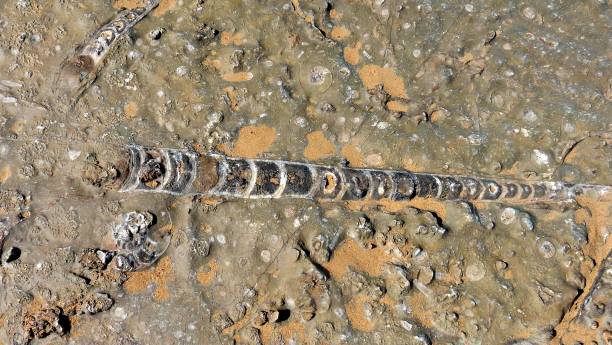
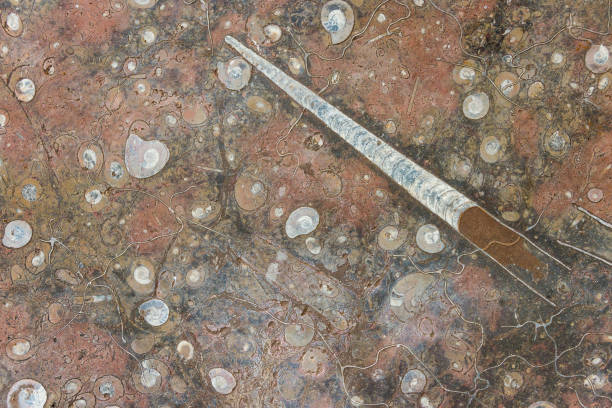
Unlike trilobites (which you usually see as single “animal” fossils), orthoceras is often seen as a pattern inside fossil stone, because one slab can show many straight shells at once. In this guide, you’ll learn what orthoceras is in simple words, how to recognize it quickly, and why the Erfoud region is so strongly linked to these fossils.

When did orthoceras live?

Orthoceras (and other straight‑shelled cephalopods) lived hundreds of millions of years ago, long before dinosaurs. These animals were part of ancient seas and were relatives—very far back—of modern cephalopods like squid and nautilus.
Morocco’s straight‑shelled fossils are usually associated with Paleozoic marine rocks, meaning they come from a time when large parts of this region were under water.

What was orthoceras, exactly?

Orthoceras was a cephalopod—a marine animal that lived in the ocean and moved using jet propulsion. It had a long shell that worked like both protection and a buoyancy tool.
Inside the shell were chambers. The animal lived in the largest chamber near the opening, and the smaller chambers helped control floating—similar to how a modern nautilus uses its shell.
That’s why some orthoceras pieces show faint internal lines: those can be the boundaries between chambers.

Why orthoceras is so common in Morocco

Orthoceras-style fossils are common in Morocco because the right conditions happened together:

  • fossil-rich marine layers formed over a very long time
  • fossils became mineralized and preserved in stone
  • later erosion exposed layers where fossils are visible and accessible
That’s why you see orthoceras fossils not only as single specimens, but also repeated many times inside one piece of stone.

Why Erfoud is famous for orthoceras

Erfoud is known worldwide for fossils because it became a center for fossil preparation and fossil stone work. Over time, workshops in and around Erfoud developed skills to cut, shape, and finish fossil-bearing stone.
This is one reason orthoceras is often linked to Erfoud:

  • the region is associated with fossil-rich stone
  • the town is a hub where fossils are prepared and displayed
If you’re staying in Merzouga, Erfoud is close, so many travelers discover orthoceras during their Sahara trip—even if their main destination is the dunes.

How to recognize orthoceras fossils

Orthoceras pieces usually show:

  • long, straight shapes (often slightly tapered)
  • sometimes faint internal lines (a “chambered” look)
  • repeated fossils in the same slab
On polished stone, orthoceras can look like clean straight silhouettes that stand out from the background.

Orthoceras vs ammonites (quick difference)

If ammonites are the spirals, orthoceras is the straight shell. Both are marine fossils, often discussed together in Morocco because they come from ancient sea environments and are commonly prepared in the Erfoud fossil region.
If you want, paste your current orthoceras post text here and I’ll rewrite the whole post in one consistent voice (more human, more informative, less “template”).